
Adherence is the quiet issue behind most sleep therapy accessory decisions. A machine that stays in a closet is not a market, and a distributor whose patients stop therapy in the first months loses the recurring accessory revenue that makes the category worth carrying. Understanding why patients stop, in their own words, is more useful than any single compliance number.
The complaints that come first
The reasons patients give are rarely abstract. The mask leaks or leaves marks on the face. The air feels dry, or the nose is congested. Water collects in the tube and the mask gurgles. The tube pulls on the mask when the patient turns over, or the sound of it against the headboard keeps a partner awake. Each of these is a physical annoyance with an identifiable cause, and each tends to arrive in the first weeks, while the habit is still fragile.
The scale of the problem is documented. A widely cited review of adherence literature, published in the Proceedings of the American Thoracic Society, reported nonadherence rates of 46 to 83 percent when adherence was defined as more than four hours of nightly use. The range is wide because studies measure adherence differently and look at different populations, but the direction is consistent: a substantial share of patients do not use therapy as prescribed, and the reasons are frequently practical rather than motivational.

Where accessories fit
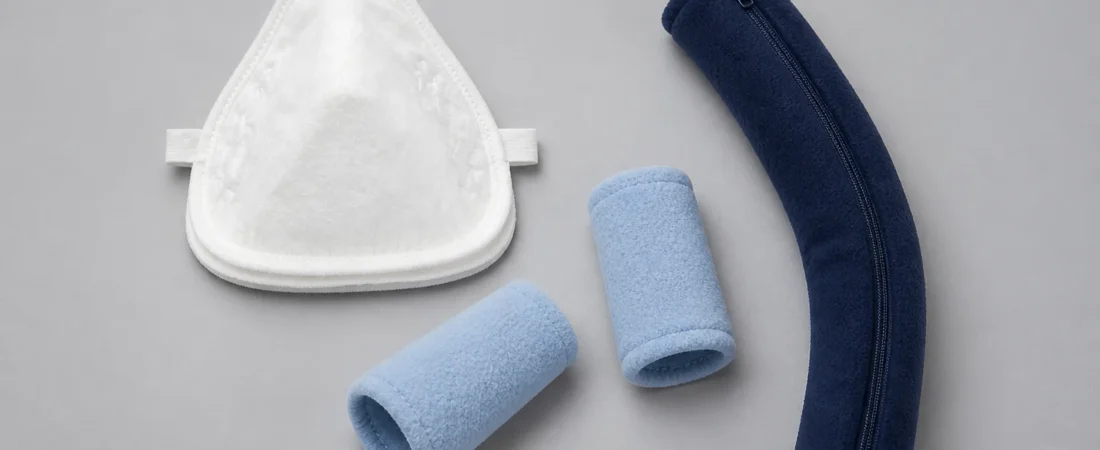
Accessories remove friction, and friction is what accumulates. An insulated cover answers condensation and tube noise. A hose lift or suspension system reduces pull on the mask. A correctly sized cushion reduces leak and skin pressure. A travel case keeps the routine intact away from home, which is where many routines break. None of these improve the prescribed pressure, and none should be presented as a substitute for clinical review, but each removes one reason to take the mask off at two in the morning.
There is a commercial corollary. Accessory purchases follow machine purchases by weeks, not years, so the first ninety days is when the relationship is either established or lost. A short follow-up that asks what specifically is going wrong will usually identify a product that already exists in the catalog.

What this means for distributors
Build the accessory range around the four most common complaints rather than around the order of the catalog: condensation, noise, tube pull and mask fit. Bundle one accessory with each new machine dispense where local rules allow, and keep a short script for the follow-up call. Retention is cheaper than acquisition in every channel, and it is the reason accessory lines earn their shelf space.
Discuss accessory bundles for your accounts with our team on the contact page.
Specifications mentioned in this article
Supporting accounts past the first ninety days?
The distributor shelf kit covers the four complaints with four SKUs, plus a short follow-up script for the ninety-day call.
This article is general product education and is not medical advice. Patients should discuss therapy settings with their clinician.
Sources