
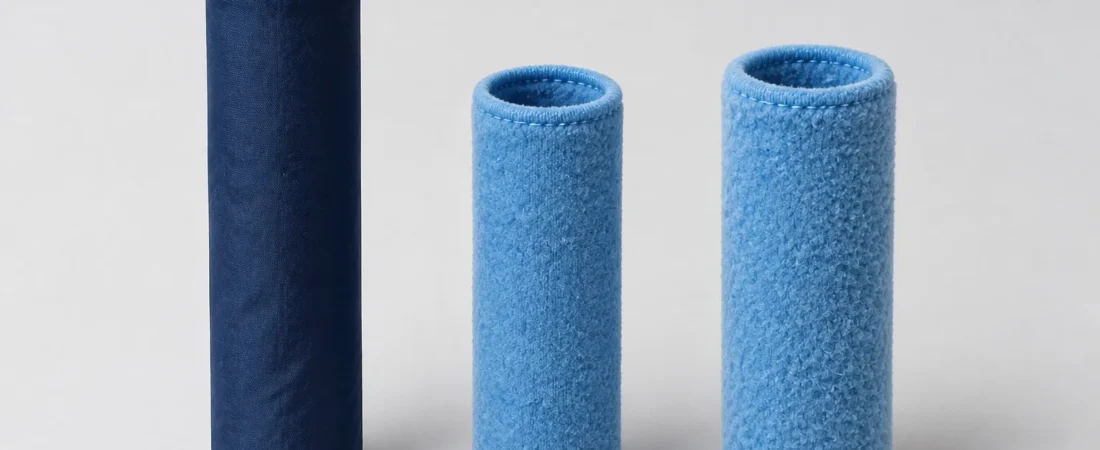
Most hose cover inquiries arrive as a material question: fleece, neoprene or knit. The honest answer is that all three work, and they work differently. Each has a place in a catalog, and the specification that matters is not the fabric name but what the fabric does to heat loss, stretch and wash life.
Three materials, three jobs
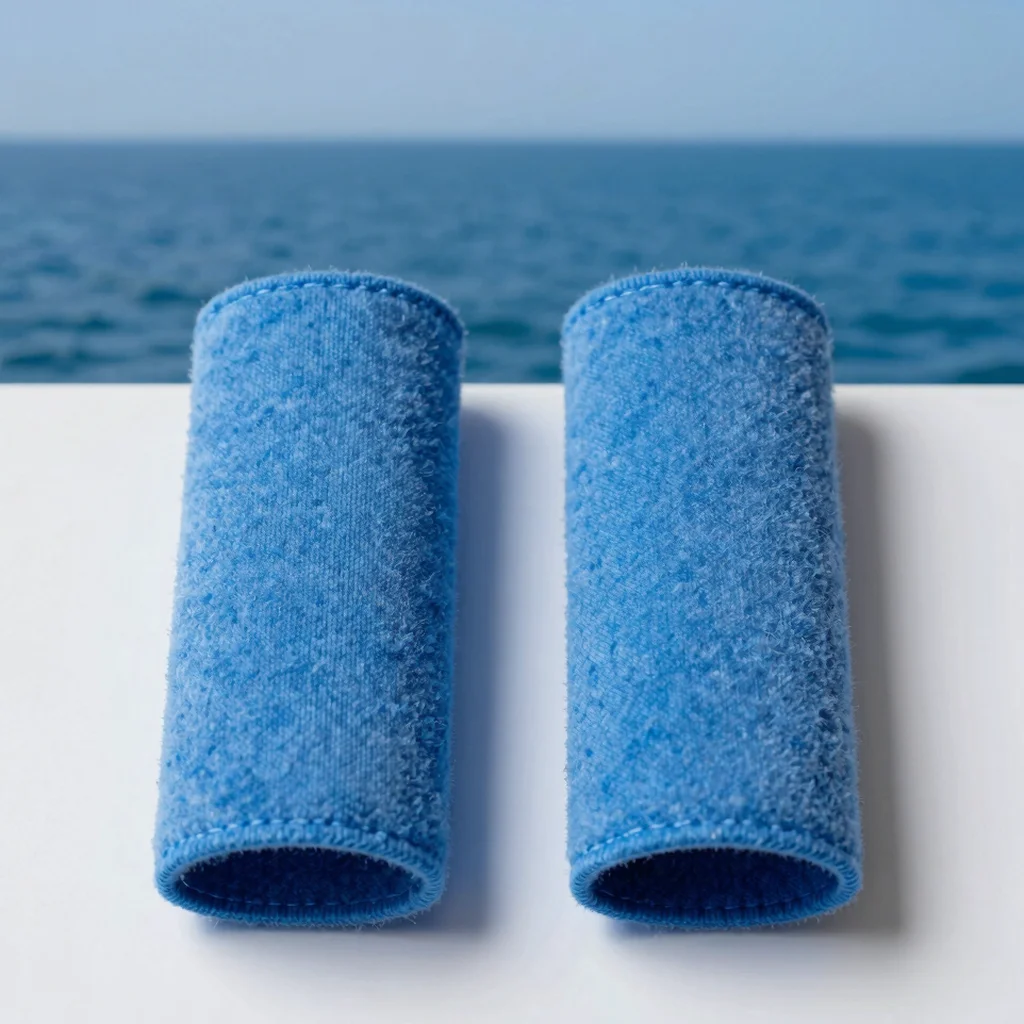
Fleece is the default for insulation. Lofted polyester traps air inside its structure, air is a poor conductor, and the result is a light sleeve with good thermal resistance and a soft hand. It is breathable, so moisture that reaches the outer layer can escape rather than sit against the tube. Its weaknesses are bulk, and pilling after repeated washing if the face fabric is loosely knit.
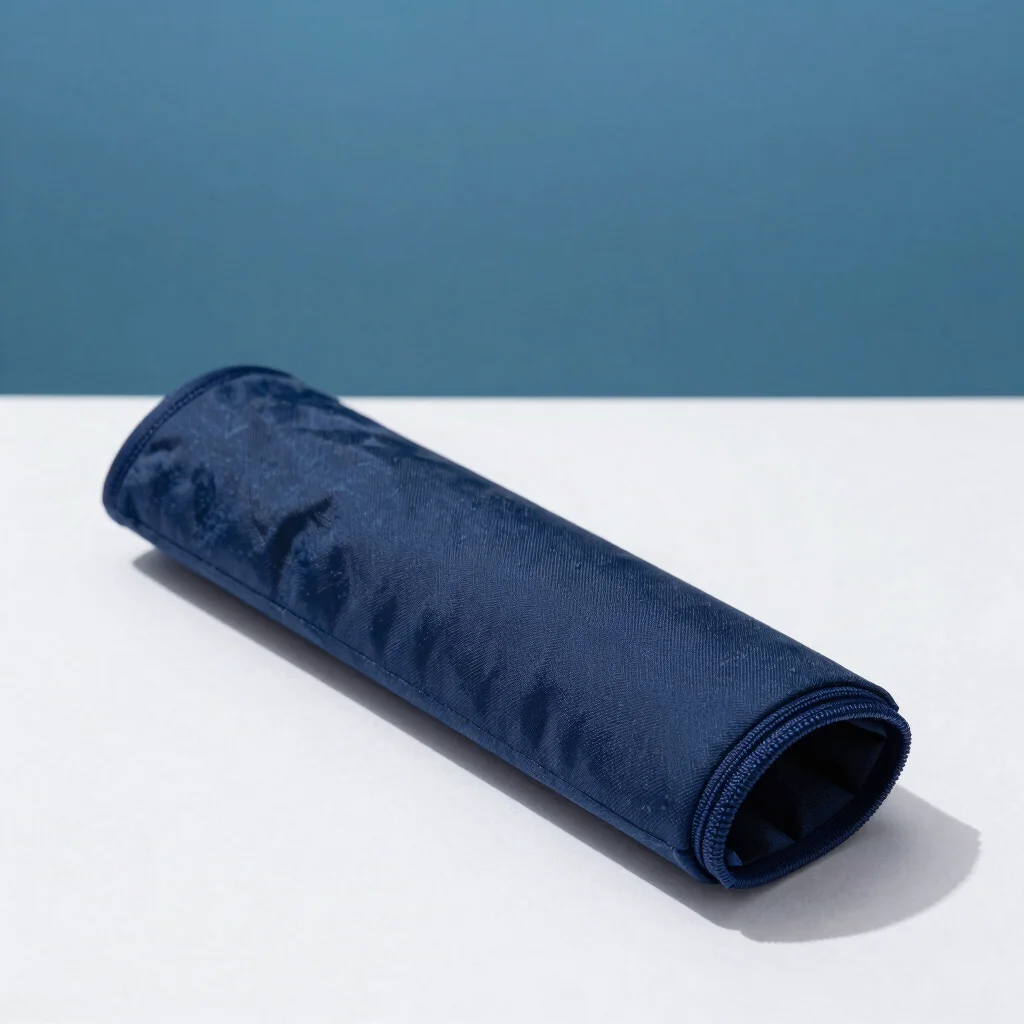
Neoprene, and the softer neoprene blends used for medical accessories, brings a closed-cell structure with higher resistance to abrasion and moisture. It is the material to specify where the tube is dragged across bed frames, chair arms and wheelchair hardware, or where a clinic wants a surface that can be wiped clean. It is heavier, less breathable, and needs a lining so the rubber does not sit directly against skin or upholstery.
Knit covers sit in between. A tubular knit with elastane stretches over the tube, holds position without a full-length closure, and packs flat for travel. Insulation is lower than fleece at the same weight, so knit suits short runs, warm rooms and patients who object to bulk rather than to cold.
Where each material fits
Match the material to the failure the patient reports. Condensation in a cold bedroom points to fleece. A tube that is being abraded or soiled in daily handling points to neoprene. A patient who travels and wants a cover that folds into a bag points to knit. Many distributors carry all three and let the packaging do the explaining, because the decision is usually made at the shelf rather than in a specification meeting.
What this means for distributors
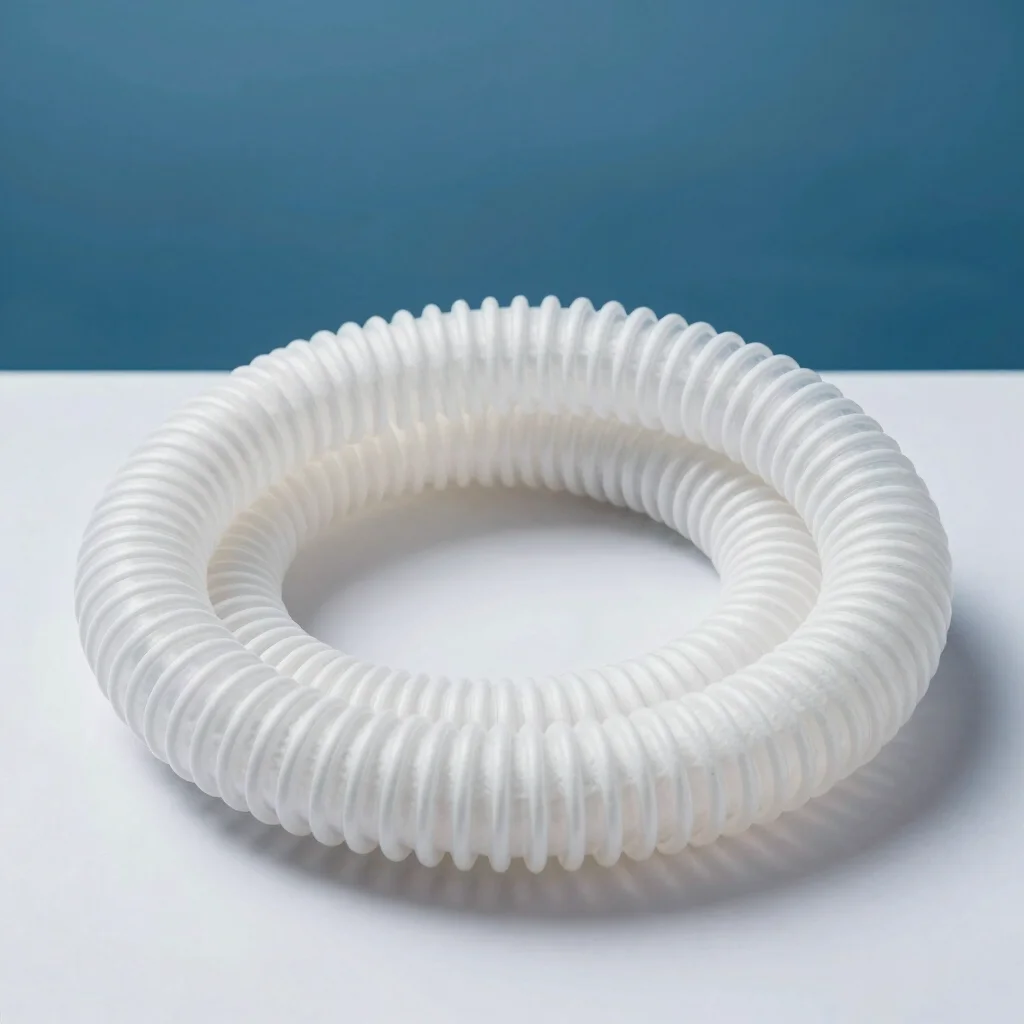
Ask three questions in the RFQ: what weight per square meter, what closure system, and what wash cycle the cover is expected to survive. Those three answers predict returns far better than the fabric name, and they give an OEM partner enough information to quote accurately. Color and branding are the last decisions, not the first.
Compare material options and request swatches on our product page.
Specifications mentioned in this article
Comparing material options for your range?
Tell us the climate, the wash cycle and the target price band. We reply with a material recommendation and the sample set that matches it.
This article is general product education and is not medical advice. Patients should discuss therapy settings with their clinician.