
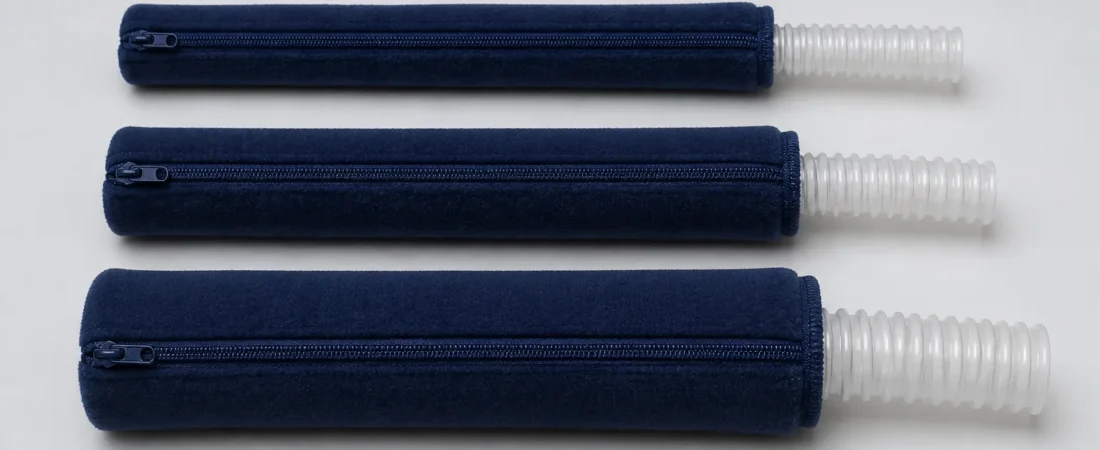
A hose cover only insulates where it touches. If the internal diameter is wrong, the sleeve either will not slide over the tube or hangs loose with cold air circulating underneath, and the ends that matter most are the ones left exposed. Sizing is therefore the first specification, before material and before branding.
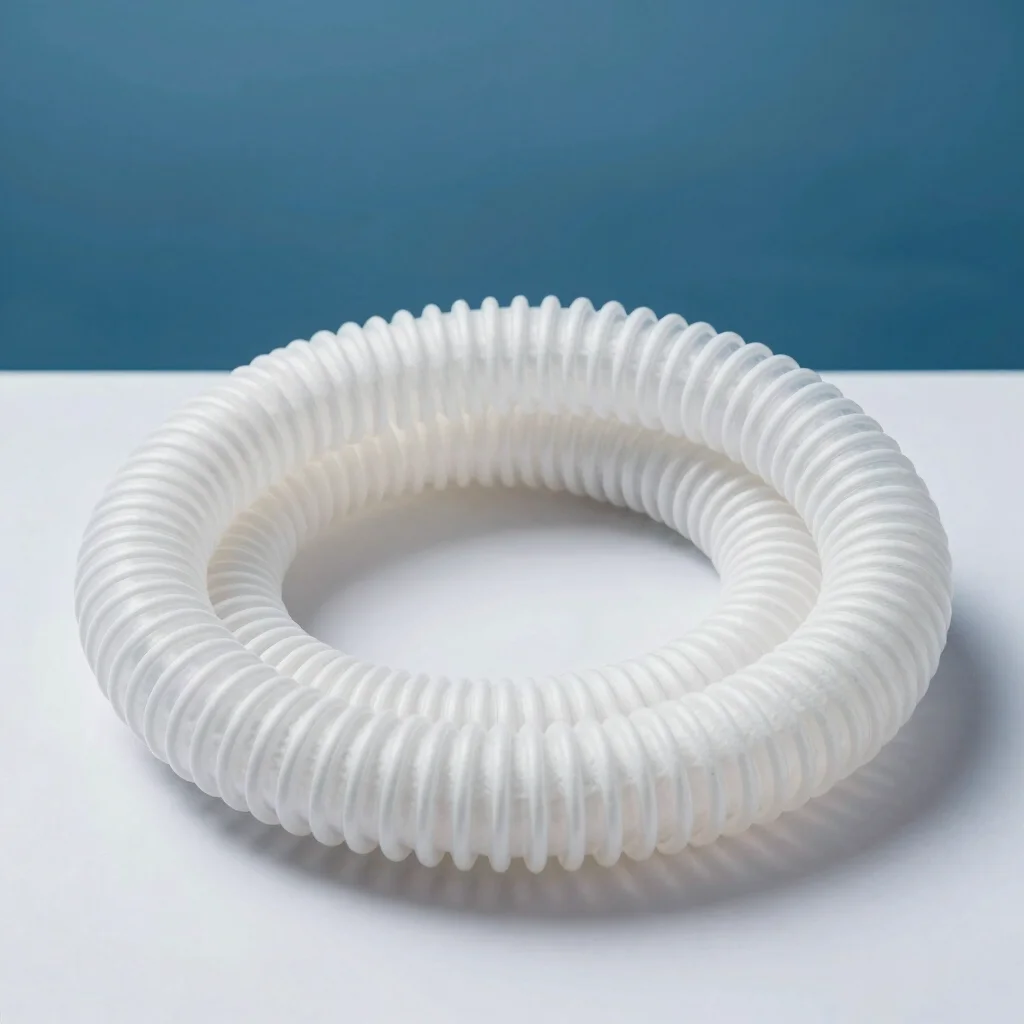
Diameter comes first
Measure the outer diameter of the tubing, not the connector. Standard CPAP tubing is 22 mm, and slim or compact tubing is commonly 15 mm or 19 mm. Connectors, cuffs and heated-tubing couplings are larger than the tube itself, so a cover is normally specified to fit over the tube and to stop short of the connector, or to be closed around it. Allow a small manufacturing tolerance: a cover built to the exact tube diameter is difficult to assemble in production and strains at the seam. Most programs work with a few millimeters of internal clearance and a closure that takes up the difference.
Diameter also touches the airflow characteristics of the system, which is the clinician’s territory. A cover does not change the inner bore of the tube, so it does not change delivered pressure. It does add a layer outside the tube, and that layer must not compress a slim-line tube. Sizing up rather than down protects performance.
Length and stretch allowance
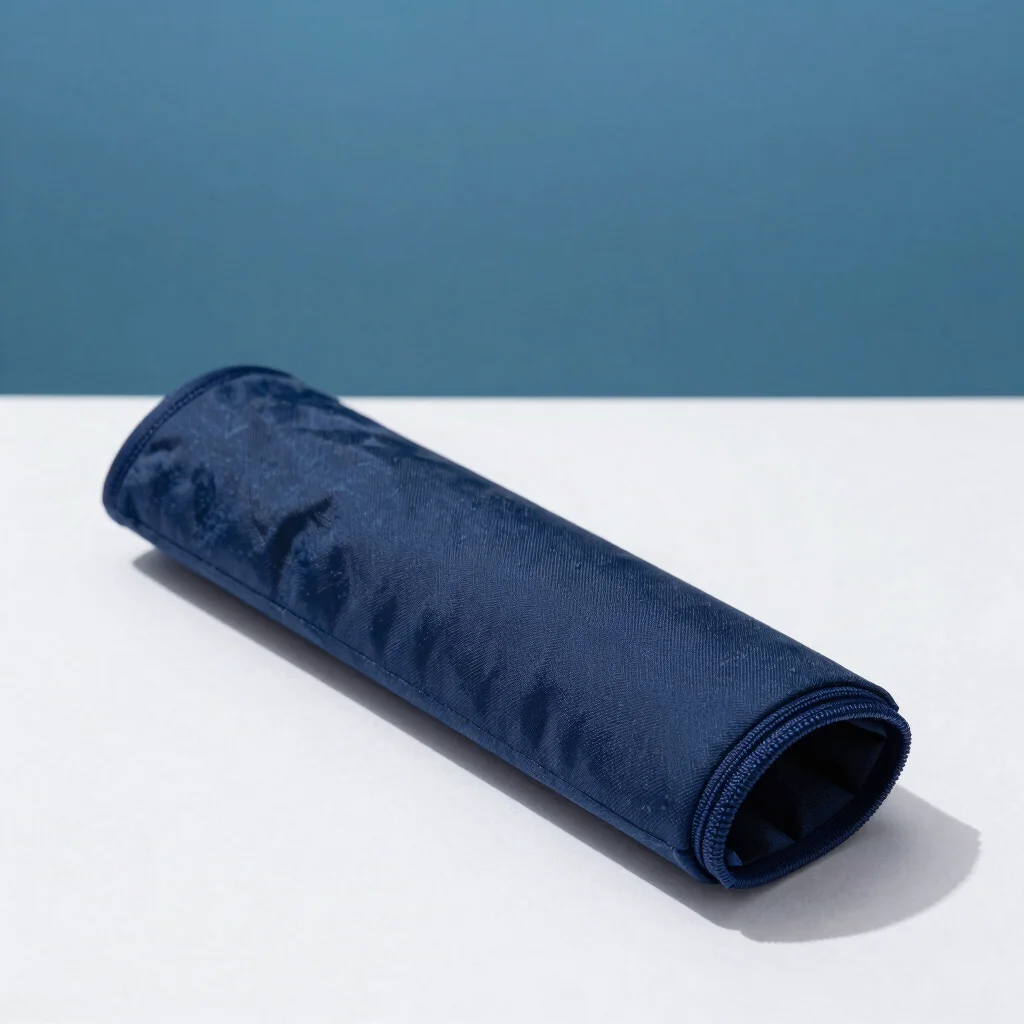
Tubing is sold in 6, 8 and 10 ft lengths, with 6 ft the most common in home setups. A cover should run from the humidifier outlet to just below the mask connection, and it should be slightly shorter than the tube rather than longer, because excess fabric bunches, traps condensation at a fold and pulls on the mask. For stretch materials, specify the relaxed length plus the intended stretch, not the stretched length, or the cover will creep shorter in service.
Closure design follows from these two numbers. A full-length zipper or hook-and-loop strip costs more and takes longer to fit; a stretch knit with no closure is faster to use and easier to pack. Neither is universally better, but the choice should be made against the tubing the customer actually dispenses.
What this means for distributors
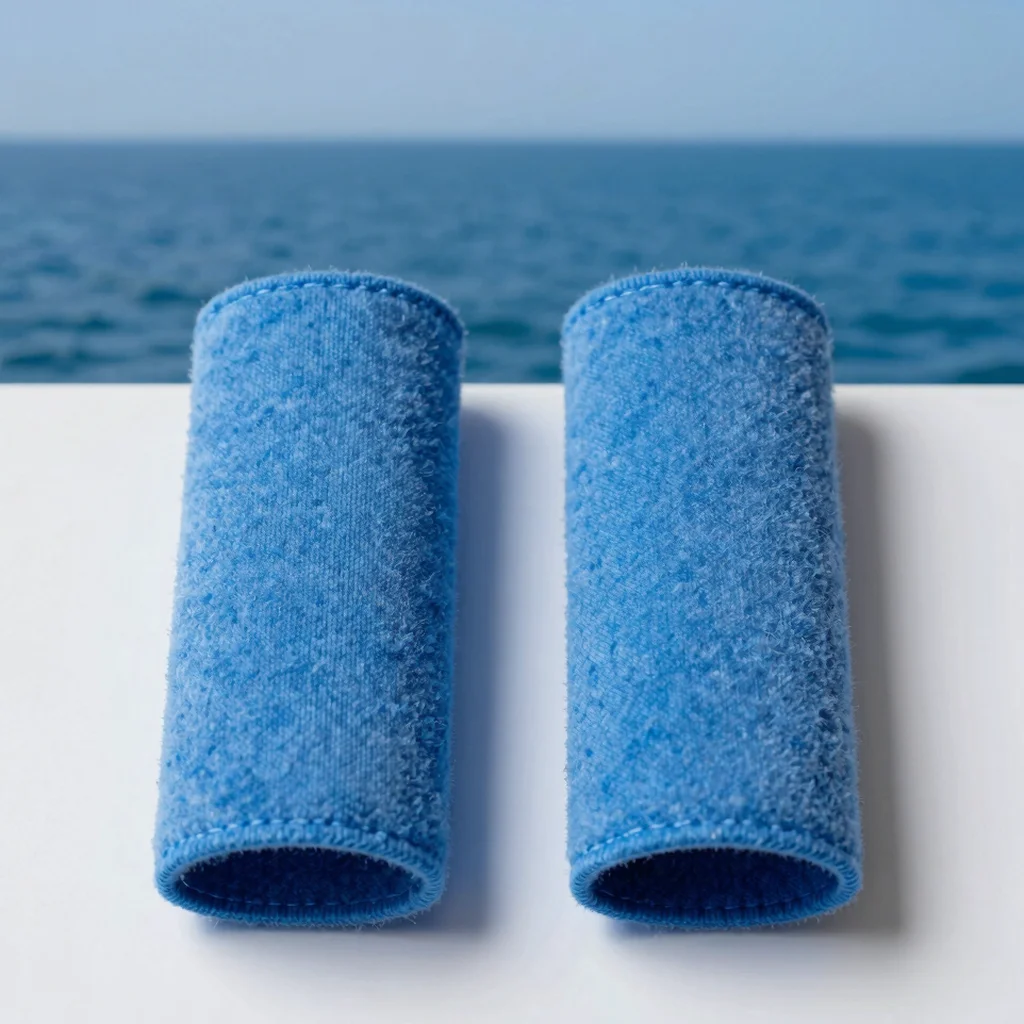
Build a small matrix: three diameters by three lengths, plus one heated-tubing variant where the coupling needs extra clearance. That matrix covers most home and clinic demand without proliferating SKUs. Send the tube brand and model with the RFQ, and ask for a fit sample before tooling, because a five-minute test on the actual tube prevents a season of returns.
Check tubing compatibility before you specify a cover on our compatibility page.
Specifications mentioned in this article
Building a size matrix for your market?
Send the tubing brands and lengths you dispense. We reply with the matching cover dimensions and a fit sample before any tooling.
This article is general product education and is not medical advice. Patients should discuss therapy settings with their clinician.