

On 18–19 November 2026, Shenzhen will host the 33rd APEC Economic Leaders’ Meeting. The APEC CEO Summit is scheduled for 17–18 November. For distributors of sleep-care accessories, the meeting matters for a practical reason: it will draw attention to the export infrastructure that already moves thousands of small, specification-heavy products — hose covers among them — from factories in the Pearl River Delta to warehouses in Europe and North America.
This is not a medical story. It is a supply-chain story, and it is worth reading before your next assortment review.

Why a sleep-accessory programme belongs in Shenzhen
Sleep-care accessories sit in an awkward category for distributors. Volumes are modest, SKU counts are high, and every market asks for slightly different packaging, labelling and tubing dimensions. That combination punishes suppliers who only run large, rigid production batches.
Shenzhen’s advantage is the density of small-batch capability: fabric suppliers, cutting and sewing units, zip and hook-and-loop hardware, print and packaging houses, all within a short drive of each other. A change from a 22 mm standard cut to a 15 mm slim cut is a production note rather than a new continent.
The Greater Bay Area adds the logistics layer. Yantian and Chiwan handle deep-sea freight, while Hong Kong International Airport provides air capacity for urgent replenishment. For a distributor balancing a slow-moving core range against seasonal peaks, having both options in one metropolitan area is a genuine planning advantage.

What APEC 2026 will focus on
According to the Shenzhen Municipal Government and Xinhua, the 2026 APEC theme is building an Asia-Pacific community and promoting shared prosperity, with openness, innovation and cooperation as the three priorities. Around 300 APEC-related events will run across several Chinese cities during the year, closing with the Leaders’ Meeting in Shenzhen, which is to be held at the Shenzhen International Exchange Center in the Xiangmihu area of Futian District.
For supply chains, the relevant threads are trade facilitation, connectivity and digital cooperation. None of this creates a product certification, and APEC does not certify, recommend or endorse any manufacturer or product. Buyers should treat meeting-week announcements as context for planning — not as a substitute for their own supplier qualification.


The product is simple; the specification is not
A hose cover looks like a fabric tube. In practice, four variables decide whether a container arrives usable.
Tubing dimensions. Standard CPAP tubing is commonly 22 mm, with slim-line tubing around 15 mm. A cover cut for one will not fit the other, and a “universal” claim should always be verified against a measured sample.
Length. Six-foot covers dominate, but eight-foot and ten-foot runs exist for bedside routing and for users who place the device further from the bed. Length tolerance matters more than most buyers expect, because a cover that is 3 cm short will not close over the connectors.
Closure. A full-length zipper is the default. A hook-and-loop wrap closure removes the zip entirely, which some markets prefer for care and laundering reasons. Both are production options, not premium upgrades.
Fabric weight and construction. Double-sided fleece, heavier single-sided fleece for homes with cats, and a wider cut for heated tubing are all distinct constructions. Substituting one for another changes both cost and performance.
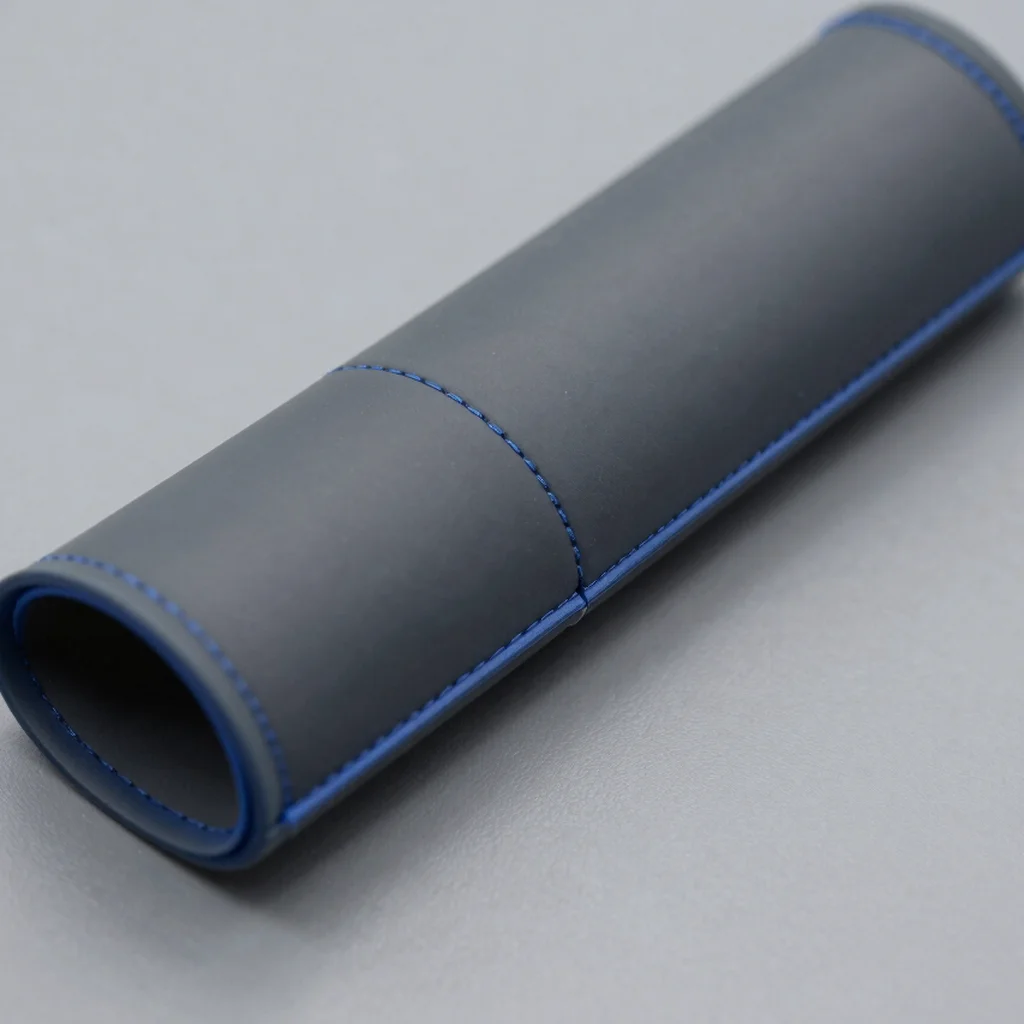
What the current line includes
The catalogue is built around made-to-order fleece programmes rather than a fixed retail assortment:
- 6 ft zippered fleece hose cover, standard 22 mm tubing
- 6 ft slim-line fleece hose cover, 15 mm tubing
- 8 ft and 10 ft zippered covers for extended runs
- 6 ft hook-and-loop fleece cover, wrap closure with no zipper
- heated-tubing fleece cover, wide cut for standard 22 mm
- cat-proof heavy fleece cover with heavier double-sided fabric
- double-sided fleece cover, 6 ft, zippered
Minimum order quantities run from 100 to 500 pieces depending on colour and packaging, and are negotiable. Larger programmes — mask and headgear comfort parts, carry bags, tube management and kits — are quoted by specification.
How an OEM hose cover order actually runs
The process is deliberately short, because most of the risk sits in the specification rather than the sewing.
- Measure and specify. Send tubing length, outer diameter, closure preference, fabric weight and packaging format.
- Quote. MOQ, unit price, lead time and trade terms are confirmed in writing. Lead time is quoted per order and is negotiable; rush slots can sometimes be arranged.
- Sample. A physical sample is produced and shipped for fitting on the actual tubing.
- Written approval. Nothing moves to bulk production until the sample is approved in writing. This single step prevents most first-order disputes.
- Bulk and inspection. Production runs against the approved sample, with in-process checks and a final inspection before packing.
Two things are worth confirming early: whether the buyer needs retail-ready packaging or bulk cartons, and whether the destination market requires specific labelling fields. Both affect cost more than the fabric itself.

Documentation discipline beats marketing claims
Distributors in this category carry a specific risk: a product can be perfectly manufactured and still fail at the border because a document is missing.
Three habits reduce that risk. Keep a written specification sheet per SKU, signed by both sides. Keep test reports current and matched to the exact material and construction being shipped — not to a sibling product. And keep claims modest: a hose cover is an accessory that insulates tubing; it is not a treatment, and no supplier should describe it as one.
This is also why we do not attach APEC to product claims. The meeting is a trade event. It will not certify a hose cover, and any supplier suggesting otherwise is worth a second look.
What to prepare before the meeting week
- A measured tubing sample, not a photo.
- Target quantities by SKU, including your slow movers — small-volume lines are where MOQ negotiations actually happen.
- Packaging artwork with barcode and language variants.
- The labelling requirements of your market, stated as a checklist.
- A reorder trigger, agreed in advance, so the second order does not restart the sampling cycle.
Start with a specification, not a catalogue request
If you distribute sleep-care products and are reviewing suppliers this quarter, send the tubing dimensions, closure preference and target volumes. We will confirm MOQ, sampling time and packaging options, and — if you are in Shenzhen during the meeting week — arrange a visit to review fabric, stitching and packing in person.
- Full product catalogue: https://cpaphosecover.com/products/
- OEM and wholesale programme: https://cpaphosecover.com/oem-wholesale/
- Tubing compatibility notes: https://cpaphosecover.com/compatibility/
- Request a quotation: https://cpaphosecover.com/contact/
*Sources: Shenzhen Municipal Government (sz.gov.cn), 15 December 2025 — 33rd APEC Economic Leaders’ Meeting in Shenzhen, 18–19 November 2026; Xinhua, 10 September 2026 — APEC CEO Summit, 17–18 November 2026; APEC China 2026 official site (apec2026.cn); venue: Shenzhen International Exchange Center, Xiangmihu (Futian District), as announced by Chinese officials and reported by Shenzhen media. Product and MOQ details: CPAP Hose Cover product catalogue.*